| Jill Willis |
|
|
|
Like a great number of the natural hoof care practitioners in the AANHCP, I have had horses throughout most of my life AND had an established career in an entirely different line of work from what I do now -- when I first enrolled in the NHC Training Program in 2007. A lot of us seemed to have the common denominator that we decided to do something 'completely different' from the work we had been doing most of our adult lives when we opted to come into this training program.
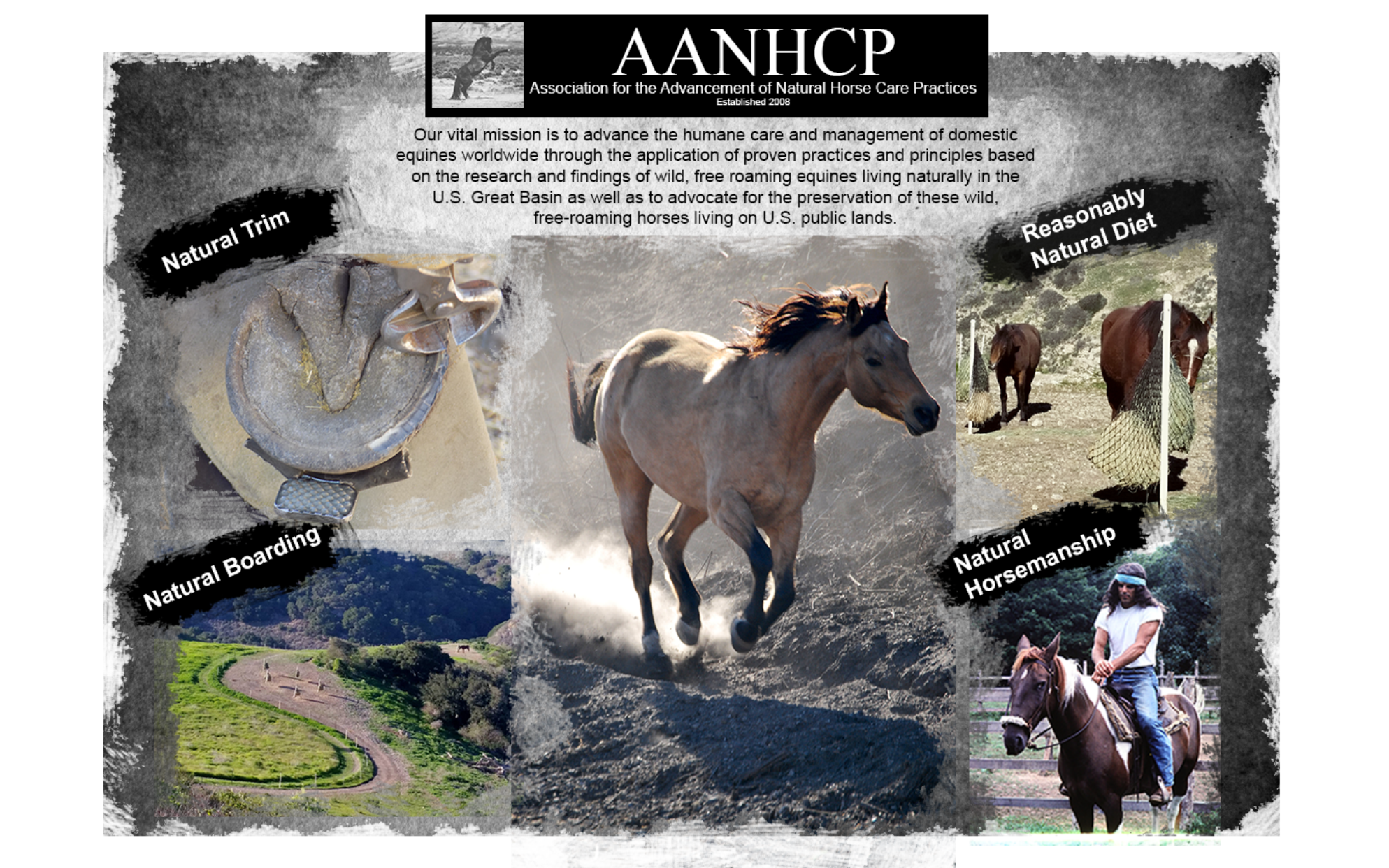
As much as I absolutely love being with horses and providing natural hoof care services, the majority of my time is devoted to helping to grow, expand, promote and market natural hoof care - as defined by the AANHCP - using the free-roaming wild mustangs of the U.S. Great Basin as the model for excellence in health.
I am one of the lucky ones. I did not come to natural hoof care as a 'last result' like so many others who are now dedicated and staunch believers. I discovered the AANHCP as a result of researching a wellness and preventative avenue for my now-23 year old Arab gelding that I have had since early 1995. When he was still a teenager, I began trying to expand my knowledge base on the topic of "Senior Care" so that he could thrive well into his 'later years' as so many horses do in the wild. One thing led to another and I was hooked! And never looked back. It is as if I had just discovered that the world was not flat and all aspects of the logic that goes with the understanding of the rotation of the earth simply fell into place.
In my previous line of work, I managed several artists and logged countless hours traveling between New York, London, Los Angeles and Minneapolis. I'm still doing a bit of that but now doing it for reasons so much more meaningful to me than my work in the past. I have five horses of my own and a small regular cliente in addition to my primary work with both the ISNHCP and the AANHCP - and working with Jaime Jackson on the training program as well.
I love my work and I love the horses. I envision a day when those people who really understand how to care for a horse - from its hooves and its diet to its freedom to move in a herd and not be confined to a stall and how and when to ride - are the majority of those responsible for these creatures. We need to throw out the molasses-laden feeds and supplements, get rid of the alfalfa, remove the shoes and trim the horse properly, allow it to run with others of its species - it is all so simple and yet it is a battle we fight daily. |
||||